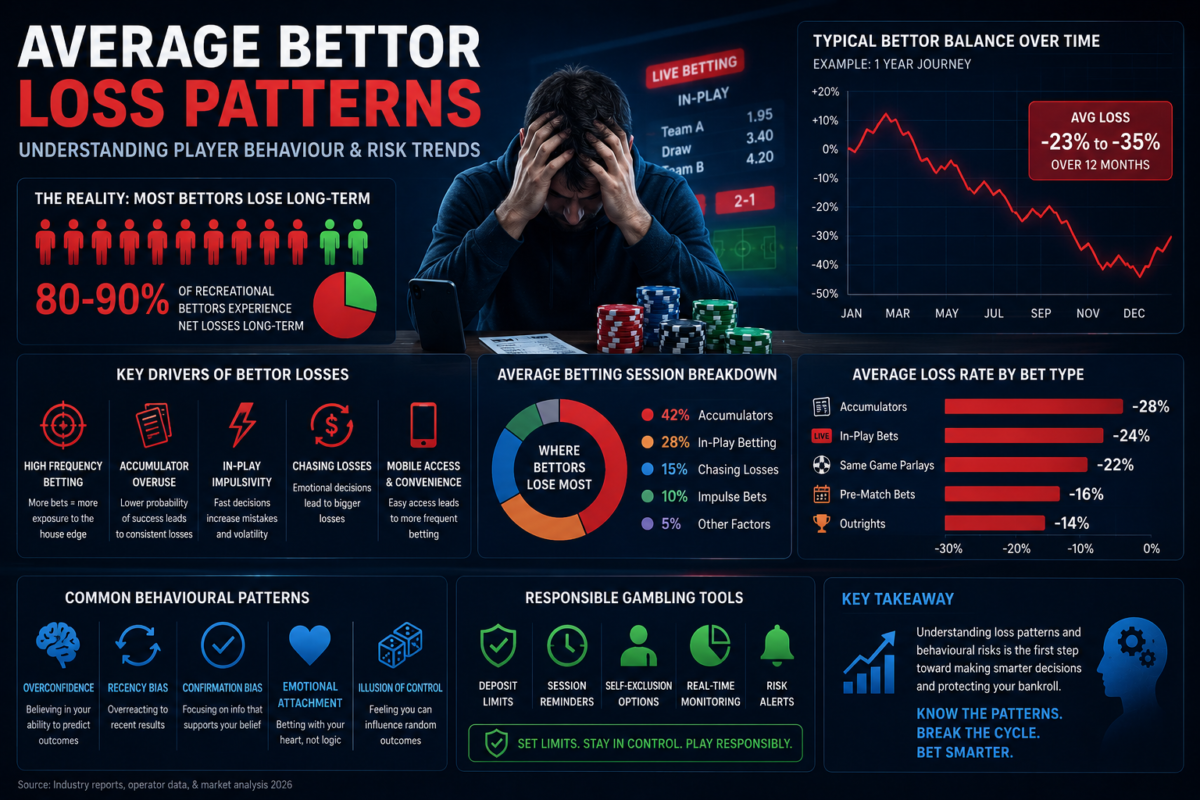
Average Bettor Loss Patterns: Understanding Player Behaviour and Risk Trends
Player behaviour remains one of the most important analytical areas within the online betting industry. While public discussion often focuses on winners and large payouts, long-term betting ecosystems are largely shaped by consistent behavioural loss patterns across average users.
This report examines common bettor loss trends, behavioural tendencies and the structural factors influencing player outcomes in regulated online betting markets.
Most Bettors Experience Long-Term Net Losses
Sports betting markets are mathematically structured around operator margin advantages. As a result, the majority of recreational bettors experience net long-term losses over extended periods of activity.
Several factors contribute to this outcome:
- bookmaker margin structures
- emotional betting decisions
- poor bankroll management
- high-frequency wagering
- impulse betting behaviour
Although short-term winning streaks are common, long-term sustainability remains difficult for average users.
Small Losses Repeated Frequently Create Larger Exposure
One of the most common behavioural patterns among recreational bettors is the accumulation of small but repeated losses over time.
Rather than losing large amounts in single sessions, many users experience:
- low-stake repetitive betting
- daily engagement cycles
- continuous accumulator usage
- frequent in-play wagering
This creates a gradual loss pattern that may feel psychologically manageable despite generating significant long-term exposure.
In-Play Betting Increases Volatility
Live betting environments tend to produce faster decision-making and higher emotional engagement compared to traditional pre-match wagering.
Key characteristics of in-play behaviour include:
- shorter reaction times
- increased impulse betting
- rapid stake repetition
- emotionally driven decision-making
- higher frequency of cash-out usage
These patterns often lead to elevated volatility and increased long-term loss exposure for recreational users.
Accumulators Remain a Major Driver of Recreational Losses
Accumulator betting remains extremely popular due to the appeal of large potential returns from relatively small stakes.
However, multi-selection wagers significantly increase variance and probability of failure.
Common accumulator behaviour patterns include:
- adding unnecessary selections
- chasing larger payouts
- combining unrelated outcomes
- emotional “value enhancement” decisions
Although accumulators create entertainment value, they also contribute heavily to average bettor losses.
Chasing Losses Is One of the Most Common Behavioural Risks
Loss-chasing behaviour occurs when bettors increase stake size or betting frequency following losing sessions.
This behaviour is often associated with:
- emotional frustration
- short-term recovery attempts
- abandonment of bankroll discipline
- increased risk exposure
Behavioural escalation frequently leads to disproportionate losses relative to the original deficit.
Mobile Betting Encourages Continuous Engagement
The growth of smartphone betting has significantly increased betting accessibility and session frequency.
Mobile-first behaviour patterns include:
- multiple betting sessions per day
- faster market interaction
- real-time notifications
- instant deposits
- continuous in-play participation
Convenience-driven engagement increases overall exposure time within betting ecosystems.
Player Psychology Influences Betting Decisions
Betting behaviour is strongly affected by cognitive biases and emotional responses.
Common psychological influences include:
- overconfidence after wins
- recency bias
- confirmation bias
- emotional attachment to teams
- illusion of predictive control
These psychological tendencies can reduce rational decision-making quality over time.
Data Analytics Are Used to Identify Behaviour Patterns
Modern betting operators rely heavily on behavioural analytics systems capable of identifying engagement trends and risk indicators.
Analytical models examine:
- session frequency
- staking patterns
- deposit behaviour
- betting volatility
- retention probabilities
Behavioural segmentation increasingly shapes both user experience and responsible gambling frameworks.
Responsible Gambling Systems Continue Expanding
Regulated markets continue strengthening responsible gambling measures designed to reduce harmful betting behaviour.
Common tools include:
- deposit limits
- session reminders
- affordability checks
- self-exclusion systems
- behavioural monitoring alerts
These systems aim to identify elevated risk behaviour before severe financial exposure develops.
Future Trends in Bettor Behaviour Analysis
Behavioural modelling is expected to become increasingly sophisticated over the coming years.
Future developments may include:
- AI-driven behavioural prediction
- real-time risk profiling
- automated intervention systems
- personalised safer gambling tools
- predictive engagement analytics
The betting industry is evolving toward highly data-driven behavioural management systems.
Conclusion
Average bettor loss patterns are shaped by a combination of structural market design, emotional decision-making and behavioural repetition.
Most long-term losses occur gradually through repeated engagement rather than isolated high-stake events. Mobile betting, in-play wagering and accumulator usage continue intensifying exposure across regulated betting markets.
As analytical tools evolve, behavioural data will play an increasingly important role in understanding player risk trends and shaping responsible gambling frameworks.