Canadian Sports Betting Growth Data: Market Expansion and Player Adoption Trends

Canadian Sports Betting Growth Data: Market Expansion and Player Adoption Trends

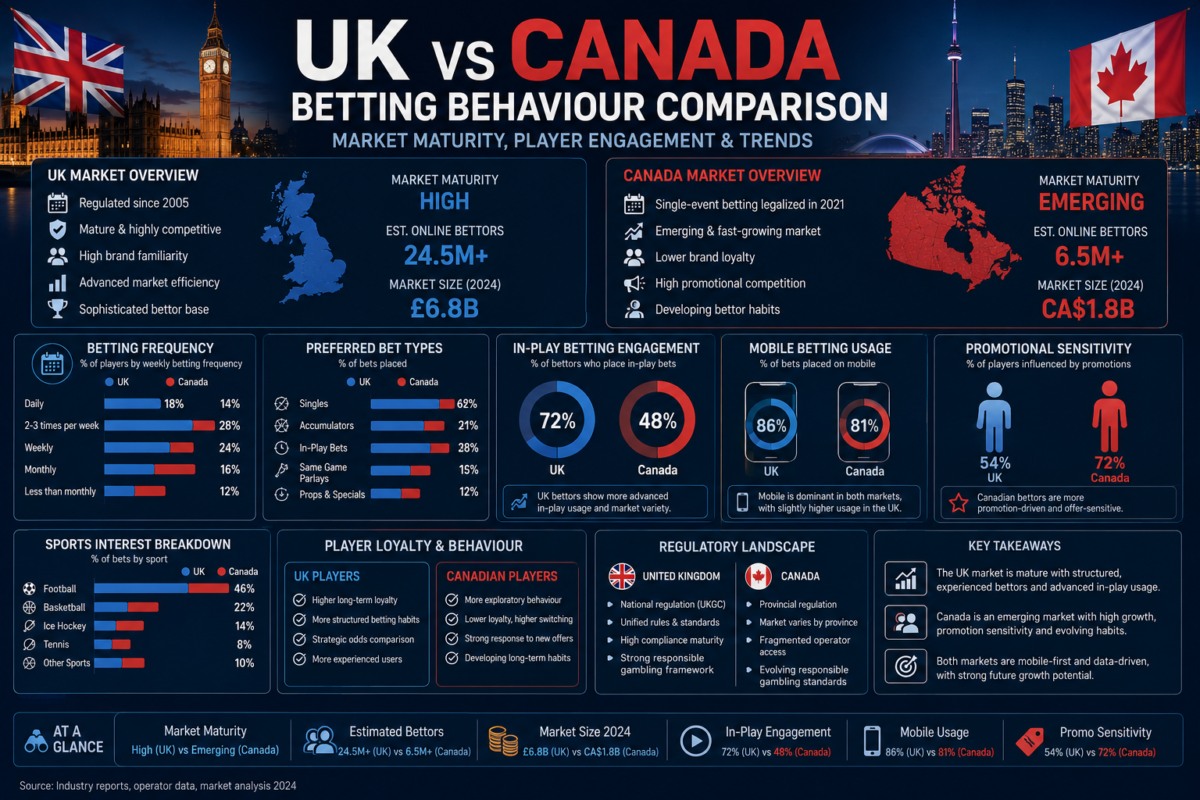
Canada’s regulated sports betting industry continues to evolve rapidly in 2026, driven by digital adoption, provincial regulation and increasing consumer participation. Since the liberalisation of single-event wagering, the Canadian market has shifted from a limited betting ecosystem into one of the fastest-growing regulated gambling environments in North America.

This report examines the current state of Canadian sports betting growth, including adoption trends, mobile engagement patterns and long-term market direction.


Canada Remains in a Market Expansion Phase

Unlike mature European betting ecosystems, Canada is still experiencing an active growth cycle. New users continue entering the market while operators compete aggressively for market share and long-term positioning.

Several characteristics define the current Canadian landscape:

  • rising active bettor participation
  • expanding sportsbook competition
  • increasing digital engagement
  • strong mobile-first adoption
  • growing awareness of regulated platforms

The industry remains highly dynamic, particularly in provinces with open competitive frameworks.


Ontario Continues to Lead Market Development

Ontario remains the most mature and competitive betting region in Canada. The province has become the benchmark for regulated online sports betting in the country.

Key factors behind Ontario’s growth include:

  • broad operator availability
  • high consumer awareness
  • advanced digital infrastructure
  • strong advertising visibility
  • large population concentration

Ontario’s regulated environment has accelerated adoption rates while also influencing operator strategies across the broader Canadian market.


Mobile Betting Is Driving User Engagement

Canadian bettors display strong mobile-first behaviour patterns. Unlike older betting markets that evolved through retail sportsbooks, many Canadian users entered the market directly through digital applications.

This has resulted in:

  • high mobile betting frequency
  • rapid adoption of live betting
  • increased app-based engagement
  • digital wallet payment preference
  • continuous multi-session usage patterns

Smartphone accessibility remains one of the strongest growth drivers across all Canadian provinces.


Live Betting Continues Expanding Rapidly

In-play betting has become a major engagement segment within the Canadian market. Sports such as hockey, basketball, football and tennis dominate live wagering activity.

The popularity of live betting is driven by:

  • real-time odds updates
  • faster betting cycles
  • interactive betting experiences
  • streaming integration
  • mobile accessibility

Operators increasingly prioritise live market infrastructure because it significantly improves engagement duration and betting frequency.


Canadian Bettors Show Exploratory Behaviour

Compared to highly mature European markets, Canadian users still demonstrate exploratory betting habits.

Observed behaviour trends include:

  • lower long-term operator loyalty
  • experimentation across multiple platforms
  • increased responsiveness to promotions
  • higher churn among newer bettors
  • preference for simple betting formats

These behavioural patterns are typical of emerging regulated markets still developing long-term consumer habits.


Operator Competition Remains Aggressive

Because the market is still expanding, many operators prioritise growth over immediate profitability.

Current competitive strategies include:

  • large-scale acquisition campaigns
  • aggressive mobile marketing
  • simplified onboarding experiences
  • retention-focused CRM systems
  • broad sports market coverage

The industry remains heavily focused on customer acquisition and brand positioning.


Regulation Continues Shaping Market Structure

Canada’s provincial regulatory structure creates a fragmented national landscape. Each province maintains different levels of market openness and operator accessibility.

This produces several market effects:

  • regional differences in competition
  • varying product availability
  • localised player adoption rates
  • distinct advertising intensity levels

Despite fragmentation, the overall direction of the Canadian market remains strongly growth-oriented.


Data Analytics Are Becoming Increasingly Important

Operators increasingly rely on analytics to optimise customer retention, engagement and pricing efficiency.

Key analytical focus areas include:

  • player behaviour modelling
  • churn prediction
  • personalised engagement
  • betting pattern analysis
  • risk management optimisation

As the market matures, data infrastructure will become one of the primary competitive advantages.


Future Outlook for Canadian Sports Betting

Canada is expected to transition gradually toward a more mature betting ecosystem over the next several years.

Expected long-term developments include:

  • reduced promotional intensity
  • increased customer retention focus
  • consolidation among operators
  • stronger compliance integration
  • stabilisation of player behaviour patterns

The market is likely to evolve toward a structure resembling established European betting industries.


Conclusion

Canadian sports betting remains in a strong expansion phase driven by mobile engagement, regulatory development and increasing consumer participation.

Ontario continues leading national growth while mobile-first behaviour patterns accelerate adoption across the country. As the market matures, future competition will increasingly focus on retention, analytics and operational efficiency rather than pure acquisition growth.

Canada’s betting industry is still evolving, but current trends suggest long-term structural stability and continued digital expansion.

UK Betting Trends 2026: Market Growth, Player Behaviour and Industry Shifts

UK Betting Trends 2026: Market Growth, Player Behaviour and Industry Shifts

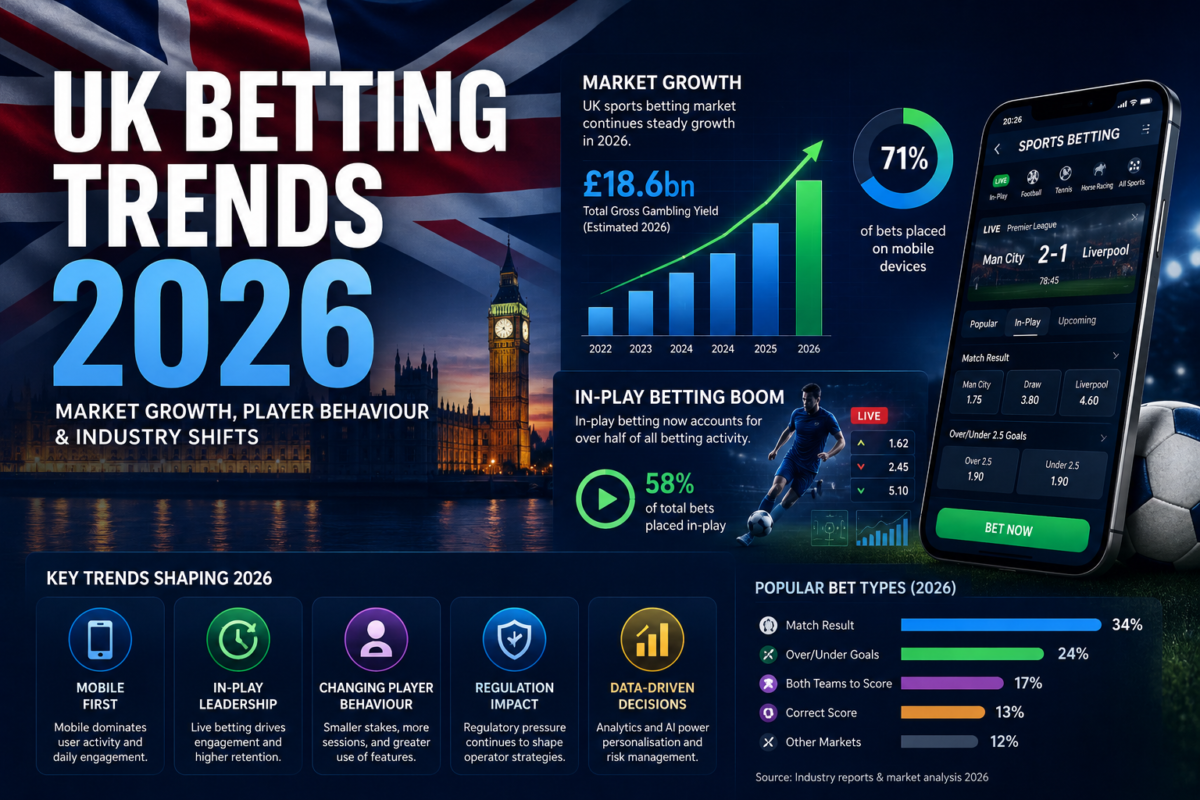
The UK sports betting industry continues to evolve rapidly in 2026, shaped by changing player habits, tighter regulation and increasing mobile engagement. While the market remains one of the most mature regulated betting ecosystems globally, current trends suggest a shift away from pure expansion and toward behavioural optimisation, data-driven engagement and retention-focused operator strategies.

This report explores the structural changes currently influencing the British betting landscape and examines how player activity, technology and market maturity are reshaping the industry.


The UK Betting Market Continues to Mature

Unlike emerging regulated markets, the UK betting sector is no longer driven primarily by explosive user growth. Instead, operators now compete within a highly saturated environment where differentiation comes from user experience, engagement tools and pricing efficiency.

Several key characteristics define the market in 2026:

  • stable active player numbers
  • increasing mobile betting activity
  • dominance of in-play wagering
  • stronger responsible gambling oversight
  • higher focus on retention rather than acquisition

The industry has entered a maturity phase where operational efficiency matters more than aggressive expansion.


Mobile Betting Dominates User Activity

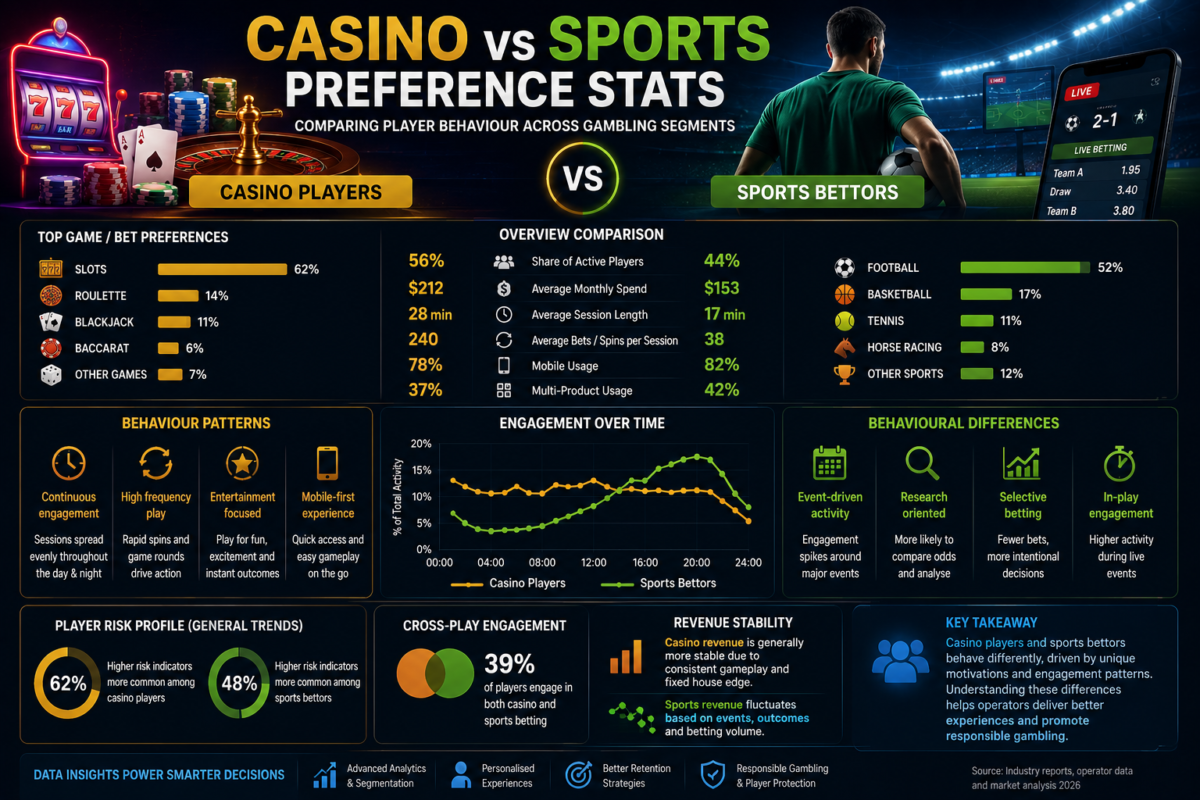
Mobile usage now represents the overwhelming majority of betting activity across the UK market. Smartphones have effectively become the default betting platform for most users.

This transition has changed how bettors interact with sportsbooks:

  • shorter but more frequent sessions
  • continuous engagement throughout live events
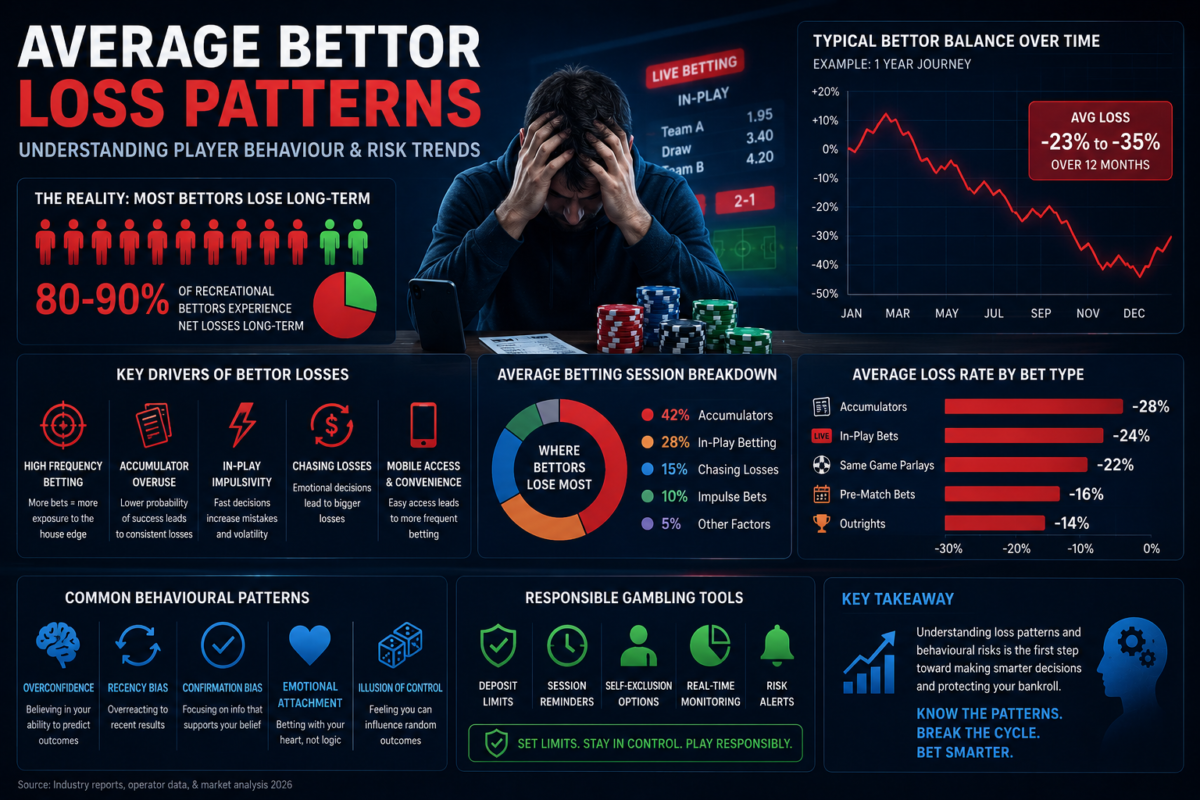
  • increased impulse wagering
  • higher in-play participation

Apps are now designed around speed, real-time odds updates and frictionless navigation. The growth of push notifications and personalised interfaces has further intensified user engagement patterns.


In-Play Betting Remains the Strongest Growth Segment

Live betting continues to outperform traditional pre-match wagering in both engagement and revenue generation. Football remains the dominant in-play sport, followed by tennis and horse racing.

Several factors contribute to this trend:

  • instant odds movement
  • micro-market availability
  • live streaming integration
  • real-time statistics
  • faster betting cycles

In-play wagering transforms betting from a single-event decision into a continuous interactive experience.

Operators increasingly prioritise live market infrastructure because in-play activity generates significantly higher engagement metrics compared to traditional betting formats.


Player Behaviour Is Becoming More Structured

The modern UK bettor behaves differently compared to earlier growth phases of online gambling.

Observed behavioural trends include:

  • smaller average stakes per wager
  • more frequent betting sessions
  • increased use of accumulators
  • preference for same-game betting products
  • higher usage of cash-out functionality

This indicates a behavioural shift toward entertainment-driven participation rather than purely outcome-focused wagering.

Many bettors now prioritise interaction, convenience and engagement mechanics over high-risk betting strategies.


Regulatory Pressure Continues to Influence the Industry

Regulation remains one of the most influential forces shaping the UK betting market in 2026.

The industry continues adapting to:

  • affordability discussions
  • advertising limitations
  • responsible gambling requirements
  • customer monitoring frameworks
  • stricter compliance expectations

Operators are increasingly forced to balance growth objectives with sustainability and risk management responsibilities.

As a result, modern sportsbook strategies now integrate compliance directly into product development and customer lifecycle management.


Betting Margins and Operator Strategy

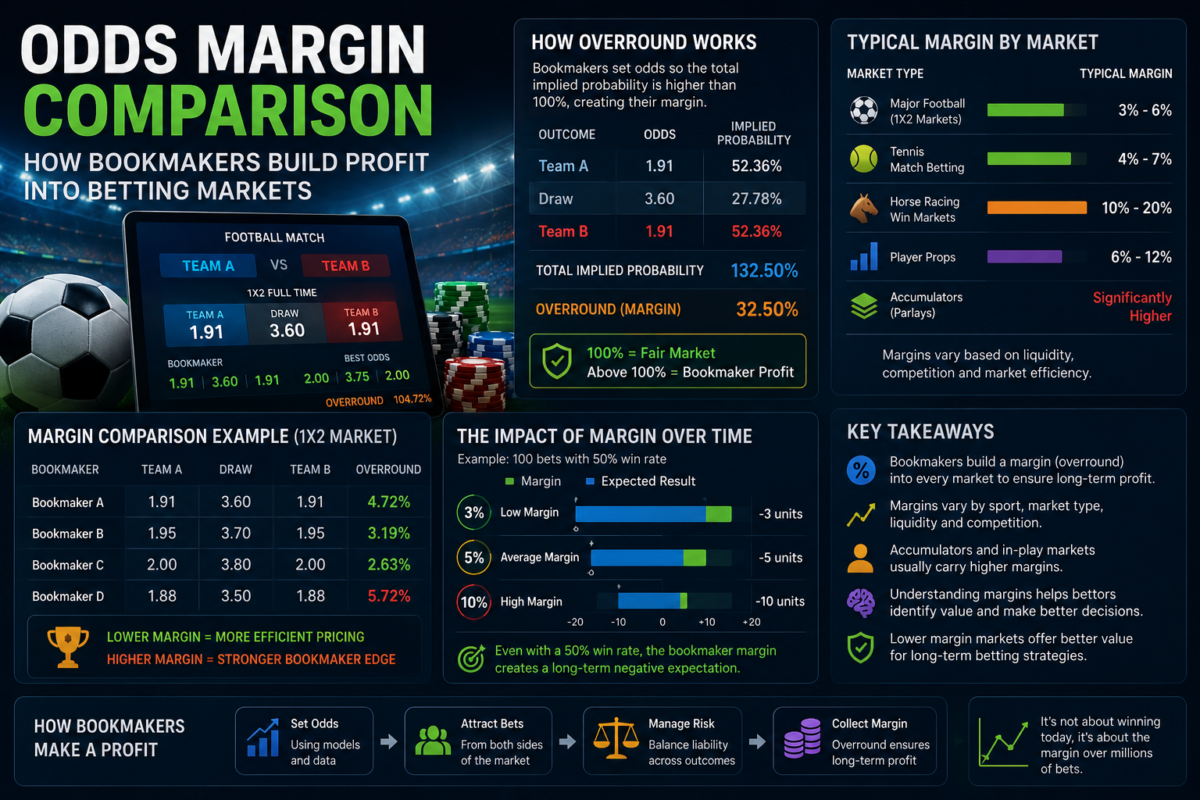
Competition within the UK market remains intense. Because acquiring new users is more expensive than in previous years, operators focus heavily on profitability optimisation and customer retention.

Common strategic priorities include:

  • margin optimisation in accumulator markets
  • enhanced loyalty ecosystems
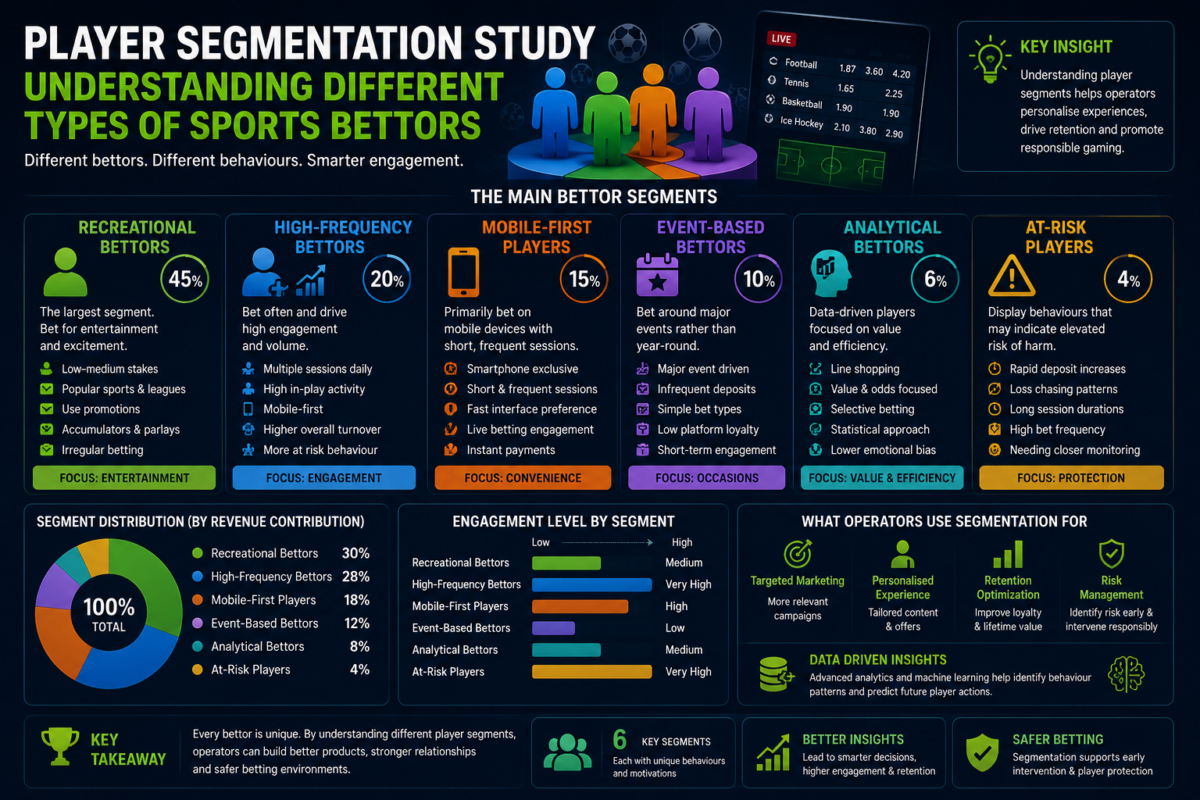
  • stronger CRM segmentation
  • personalised offers and engagement
  • retention-based user targeting

Rather than competing purely on bonuses, many brands now compete through platform quality, market depth and user experience.


Data and Analytics Are Driving Industry Decisions

Modern betting operators rely heavily on behavioural analytics and predictive modelling.

Key areas influenced by data analysis include:

  • player retention forecasting
  • risk profiling
  • live odds adjustments
  • behavioural segmentation
  • fraud and abuse detection

The betting industry increasingly resembles a real-time analytics ecosystem where data infrastructure provides competitive advantage.


Future Outlook for the UK Betting Industry

The UK market is expected to remain stable rather than explosive over the next several years. However, technological evolution and behavioural refinement will continue reshaping the ecosystem.

Expected future developments include:

  • further dominance of mobile wagering
  • AI-driven personalisation
  • deeper behavioural segmentation
  • stronger compliance automation
  • increased focus on sustainability

The market’s future is likely to centre around operational intelligence rather than raw expansion.


Conclusion

The UK betting market in 2026 reflects a highly mature and technologically advanced ecosystem shaped by behavioural optimisation, mobile engagement and regulatory oversight.

Growth no longer comes primarily from new user acquisition. Instead, operators compete through data analysis, engagement quality and retention-focused infrastructure.

As the industry evolves, player behaviour and analytics will continue defining the next generation of betting market strategy.


Canadian Sports Betting Growth: Market Expansion and Player Adoption Trends

Intro

Canada’s regulated sports betting environment has undergone rapid expansion following market liberalisation. The 2026 landscape shows continued growth driven by player adoption, regional regulation and digital accessibility.

This report analyses structural drivers of Canadian betting market expansion.


Rapid Market Adoption Phase

Unlike mature European markets, Canada remains in an adoption stage characterised by:

  • increasing active bettors
  • expanding operator presence
  • rising digital wagering participation
  • growing public awareness

This phase resembles early-stage regulated markets transitioning toward maturity.


Regional Regulatory Fragmentation

Canada’s betting growth is influenced by provincial regulation structures. Provinces control licensing frameworks, leading to regional differences in operator availability and market competition.

Key effects:

  • varied operator density
  • regional marketing intensity
  • differing product offerings
  • localised player adoption rates

Ontario remains the most competitive and developed regional market.


Mobile-First Betting Environment

Canadian bettors demonstrate strong mobile-first behaviour from the outset. Unlike legacy markets, adoption has occurred directly through digital platforms rather than retail betting transition.

Characteristics include:

  • app-centric wagering
  • live betting adoption
  • digital wallet payments
  • continuous engagement patterns

This creates a technologically advanced betting ecosystem despite its relative youth.


Player Profile Characteristics

Canadian bettors differ from mature market users in several ways:

  • higher exploratory behaviour
  • lower brand loyalty
  • increased promotional responsiveness
  • higher early-stage churn

These are typical of developing regulated markets.


Operator Expansion Dynamics

Operators in Canada prioritise:

  • market entry positioning
  • brand recognition
  • acquisition campaigns
  • platform accessibility

Profitability remains secondary to market capture in early growth phases.


Future Market Direction

Canada is expected to move toward maturity through:

  • consolidation of operators
  • stabilised player base
  • reduced promotional intensity
  • stronger retention strategies

The trajectory suggests convergence toward European-style market behaviour over time.


Conclusion

Canada’s sports betting sector remains in an expansion phase defined by rapid adoption, regional regulation and digital-first engagement. The market’s future will likely shift from acquisition-driven growth toward behavioural stabilisation and retention-focused competition.

UK Betting Trends 2026: Market Growth, Player Behaviour and Industry Shifts

Intro

The UK remains one of the most mature regulated sports betting markets in the world. However, 2026 shows notable structural changes in player behaviour, betting frequency and operator strategy. This report analyses current trends shaping the British online betting landscape.


Market Size and Growth Direction

The UK online betting sector has transitioned from rapid expansion to stabilised maturity. Growth is now driven less by new player acquisition and more by increased engagement from existing users.

Key characteristics of the 2026 market include:

  • stable active bettor population
  • rising mobile betting share
  • increased in-play wagering
  • higher average session frequency

Rather than broad expansion, the UK market is evolving through behavioural intensification.


Shift Toward In-Play Betting

One of the most significant structural trends is the dominance of in-play betting. Football, tennis and horse racing account for the majority of live betting activity.

Drivers of in-play growth:

  • mobile accessibility
  • faster odds updates
  • real-time data feeds
  • micro-market availability

This has shifted betting from pre-match decision-making toward continuous engagement.


Player Behaviour Patterns

UK bettors in 2026 display more structured betting habits than in earlier years.

Observed patterns include:

  • smaller average stakes per bet
  • higher bet frequency
  • preference for accumulators
  • increased use of cash-out features

This suggests bettors prioritise engagement and entertainment value over single-event risk exposure.


Operator Strategy Adjustments

UK operators have adapted to behavioural shifts by:

  • expanding in-play markets
  • refining margin control on accumulators
  • emphasising mobile UX
  • managing stake volatility

Margin optimisation rather than expansion is now central to profitability.


Regulatory Influence

Regulation continues to shape the market environment. Responsible gambling requirements, affordability checks and advertising limits have reinforced a more controlled betting ecosystem.

The result is a market defined by:

  • stability
  • compliance
  • behavioural monitoring
  • controlled growth

Conclusion

The UK betting market in 2026 reflects maturity rather than expansion. Growth now occurs through engagement intensity, in-play dominance and behavioural consistency rather than new player influx.

Future evolution will likely centre on mobile interaction patterns and risk management frameworks rather than market scale.