Risk Profiles of Online Bettors: Behaviour Patterns and Gambling Exposure Analysis

Risk Profiles of Online Bettors: Behaviour Patterns and Gambling Exposure Analysis

Online betting markets are increasingly shaped by behavioural analytics and player risk assessment systems. Modern sportsbooks and gambling platforms continuously analyse engagement patterns to better understand how different users interact with betting environments and how risk exposure develops over time.

This report explores the most common risk profiles observed among online bettors, including behavioural characteristics, engagement trends and the structural factors influencing gambling exposure.


Not All Bettors Carry the Same Risk Level

One of the most important findings within gambling behaviour analysis is that bettors do not engage with betting platforms in the same way.

Risk exposure varies significantly depending on:

  • betting frequency
  • stake size patterns
  • emotional behaviour
  • session duration
  • product preference
  • financial management habits

Most recreational users remain relatively low-risk participants, while smaller behavioural segments display elevated exposure patterns.


Recreational Bettors Typically Represent Lower-Risk Profiles

Low-risk recreational users usually engage with betting primarily for entertainment purposes.

Typical characteristics include:

  • low to moderate stakes
  • irregular betting sessions
  • event-based participation
  • limited session duration
  • stronger spending awareness

These bettors often demonstrate better separation between entertainment activity and long-term financial expectations.

Although losses still occur, engagement intensity usually remains controlled.


High-Frequency Bettors Display Elevated Exposure

One of the clearest indicators of increased gambling exposure is high betting frequency.

High-frequency users commonly demonstrate:

  • multiple sessions daily
  • continuous in-play activity
  • rapid stake repetition
  • shorter decision cycles
  • high overall wagering volume

While not all high-frequency bettors experience problematic behaviour, increased activity intensity often correlates with elevated long-term exposure risk.


In-Play Betting Can Intensify Behavioural Risk

Live betting environments create unique behavioural conditions that differ from traditional pre-match wagering.

In-play engagement often involves:

  • emotional decision-making
  • faster wagering cycles
  • continuous market access
  • reduced reflection time
  • rapid loss-recovery attempts

These dynamics can increase impulsive betting behaviour and overall volatility exposure.

Because of this, many behavioural monitoring systems pay particular attention to live betting activity patterns.


Loss-Chasing Behaviour Remains a Major Risk Factor

Loss-chasing occurs when bettors increase stake size or betting intensity following losing sessions in an attempt to recover losses quickly.

Common indicators include:

  • sudden stake escalation
  • increased deposit frequency
  • emotional wagering patterns
  • abandonment of bankroll discipline
  • rapid re-engagement after losses

This behaviour often leads to disproportionately larger exposure compared to the original losses.


Mobile Accessibility Increases Continuous Engagement

Smartphone betting has significantly changed how users interact with gambling platforms.

Mobile-first behaviour encourages:

  • constant accessibility
  • multiple short sessions
  • notification-driven engagement
  • instant deposit capability
  • rapid live betting participation

While mobile convenience improves user experience, it can also increase overall betting exposure by reducing friction between intention and action.


Different Products Carry Different Risk Characteristics

Not all gambling products generate the same behavioural patterns.

Sports betting typically involves:

  • event-based activity
  • longer decision cycles
  • outcome analysis
  • external sports engagement

Casino products more commonly involve:

  • continuous gameplay
  • repetitive wagering
  • shorter action intervals
  • rapid outcome cycles

Because of these structural differences, behavioural risk indicators often vary significantly between casino and sportsbook environments.


Behavioural Analytics Are Central to Modern Risk Detection

Regulated gambling operators increasingly rely on predictive behavioural systems designed to identify elevated risk patterns.

Monitoring models analyse:

  • session frequency
  • deposit behaviour
  • wagering volatility
  • interaction timing
  • product switching patterns
  • emotional betting indicators

Artificial intelligence and machine learning systems are becoming increasingly important in identifying behavioural escalation trends.


Responsible Gambling Systems Continue Expanding

Modern regulated markets continue strengthening responsible gambling frameworks aimed at reducing harmful betting behaviour.

Common protective measures include:

  • deposit limits
  • session reminders
  • affordability checks
  • cooling-off periods
  • self-exclusion systems
  • behavioural intervention alerts

The focus is gradually shifting from reactive intervention toward predictive risk management.


Future Trends in Bettor Risk Analysis

Behavioural monitoring systems are expected to become significantly more advanced over the coming years.

Future developments may include:

  • AI-driven behavioural prediction
  • real-time intervention systems
  • personalised safer gambling tools
  • predictive risk scoring
  • adaptive engagement controls

The betting industry is moving toward increasingly sophisticated behavioural risk management ecosystems.


Conclusion

Risk profiles among online bettors vary significantly depending on engagement intensity, behavioural habits and product interaction patterns.

While many users participate recreationally with controlled exposure, high-frequency activity, in-play betting and emotional wagering behaviour can increase long-term risk levels substantially.

As gambling platforms continue evolving, behavioural analytics and responsible gambling systems will play an increasingly central role in identifying risk patterns and supporting safer betting environments.
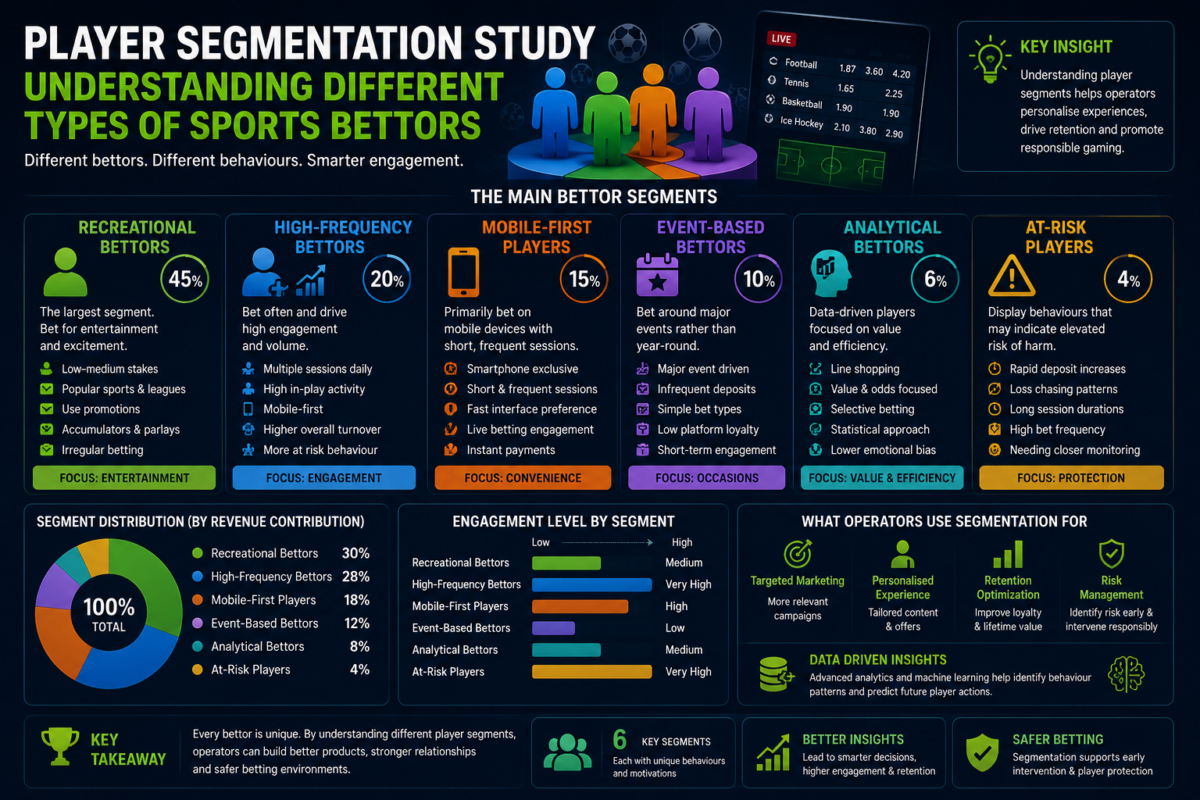
Player Segmentation Study: Understanding Different Types of Sports Bettors

Player Segmentation Study: Understanding Different Types of Sports Bettors

Modern sports betting platforms rely heavily on behavioural segmentation to understand user activity, optimise engagement and manage long-term profitability. Not all bettors behave in the same way, and the industry increasingly categorises players into distinct behavioural groups based on activity patterns, betting preferences and engagement frequency.

This report explores the most common bettor segments found within regulated online betting markets and examines how operators use behavioural analysis to personalise user experiences.


Why Player Segmentation Matters

Player segmentation allows sportsbooks to better understand how different users interact with betting platforms.

Segmentation models help operators analyse:

  • betting frequency
  • stake size patterns
  • product preferences
  • session behaviour
  • retention likelihood
  • engagement intensity

These insights influence everything from marketing strategy to responsible gambling systems.


Recreational Bettors Represent the Largest Segment

Recreational users remain the dominant group across most regulated betting markets.

Typical characteristics include:

  • low to medium stake sizes
  • entertainment-focused behaviour
  • preference for popular sports
  • accumulator usage
  • irregular betting schedules

These players often prioritise enjoyment and excitement rather than long-term profitability.

Recreational bettors also demonstrate higher responsiveness to promotions, enhanced odds and large payout opportunities.


High-Frequency Bettors Drive Significant Engagement

A smaller segment of users generates disproportionately high betting activity.

High-frequency bettors typically display:

  • multiple sessions per day
  • strong in-play participation
  • continuous mobile engagement
  • rapid market interaction
  • higher overall wagering volume

This group contributes significantly to sportsbook liquidity and overall betting turnover.

However, elevated engagement levels also require closer responsible gambling monitoring.


Mobile-First Players Continue Expanding

Mobile-first users now represent one of the fastest-growing behavioural segments.

Common characteristics include:

  • smartphone-exclusive betting
  • short but frequent sessions
  • preference for fast interfaces
  • live betting engagement
  • instant payment usage

These players often interact with sportsbooks in a highly fragmented but continuous manner throughout the day.

The growth of mobile betting has fundamentally changed user engagement dynamics across the industry.


Casual Event-Based Bettors Behave Differently

Some bettors participate primarily during major sporting events rather than through continuous long-term engagement.

Examples include:

  • World Cup tournaments
  • major boxing matches
  • Grand Slam finals
  • Super Bowl events
  • high-profile football derbies

Event-based users often:

  • deposit infrequently
  • focus on headline markets
  • prefer simple bet formats
  • show low platform loyalty

This segment creates large temporary spikes in operator traffic and betting volume.


Analytical Bettors Focus on Value and Efficiency

A smaller percentage of bettors approach wagering through analytical or data-driven methods.

Characteristics include:

  • line shopping across sportsbooks
  • lower emotional involvement
  • market efficiency analysis
  • statistical modelling
  • selective betting frequency

These players typically focus more on pricing value than entertainment engagement.

Sportsbooks often monitor analytical bettors more closely because their activity may indicate higher long-term profitability potential from the player perspective.


Behavioural Risk Segmentation Is Increasingly Important

Modern operators also categorise users according to behavioural risk indicators.

Monitoring systems analyse factors such as:

  • rapid deposit escalation
  • increased session duration
  • emotional betting patterns
  • loss-chasing behaviour
  • unusually high wagering intensity

Responsible gambling frameworks increasingly rely on predictive behavioural analysis rather than reactive intervention alone.


Personalisation Is Reshaping User Experiences

Player segmentation strongly influences modern sportsbook personalisation systems.

Operators now tailor:

  • homepage content
  • promotional visibility
  • suggested markets
  • notifications
  • retention campaigns
  • betting recommendations

This creates increasingly individualised betting environments designed to maximise engagement and retention.


Data Analytics Power Modern Segmentation Models

Behavioural segmentation relies heavily on real-time analytics infrastructure.

Key analytical inputs include:

  • betting frequency
  • preferred sports
  • average stake size
  • live betting participation
  • deposit behaviour
  • interaction timing patterns

Artificial intelligence and machine learning systems are becoming increasingly important in identifying behavioural clusters and predicting future engagement trends.


Future Trends in Player Segmentation

Behavioural modelling is expected to become significantly more advanced over the coming years.

Future developments may include:

  • AI-driven real-time segmentation
  • predictive churn analysis
  • behavioural risk forecasting
  • automated engagement optimisation
  • personalised safer gambling systems

The betting industry is evolving toward increasingly adaptive and data-driven player management ecosystems.


Conclusion

Player segmentation has become a central component of modern sportsbook operations. Different types of bettors display distinct behavioural patterns, engagement styles and risk characteristics.

From recreational users and event-based participants to analytical bettors and high-frequency mobile players, segmentation allows operators to personalise experiences, optimise engagement and improve risk management.

As data infrastructure evolves, behavioural analysis will continue shaping the future of regulated sports betting markets.