UK vs Canada Betting Behaviour Comparison: Market Maturity and Player Engagement Trends
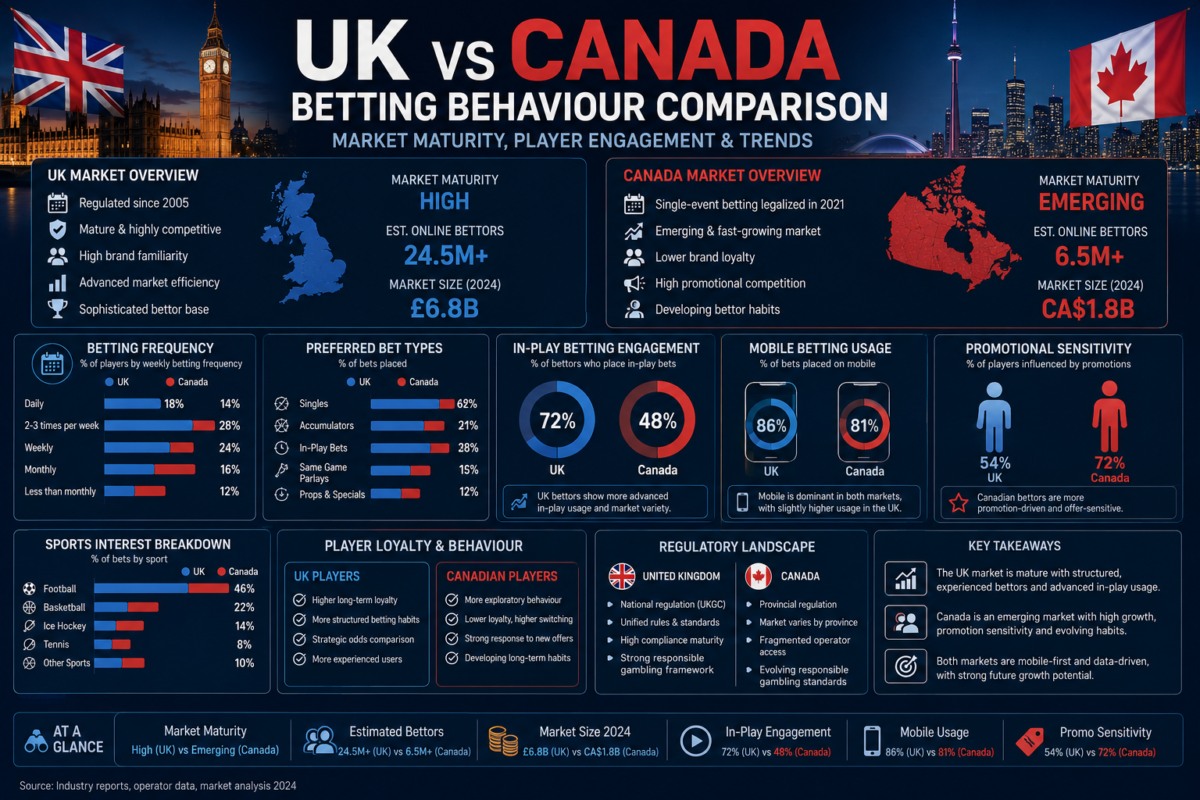
The United Kingdom and Canada represent two very different stages of regulated online betting market development. While the UK operates as one of the world’s most mature gambling ecosystems, Canada remains in a relatively early expansion phase following the liberalisation of single-event sports wagering.
This report compares player behaviour patterns, engagement trends and structural differences between the UK and Canadian betting markets.
Market Maturity Shapes User Behaviour
One of the largest differences between the two regions is overall market maturity.
The UK betting industry has operated within a highly competitive regulated framework for many years. This has produced:
- established user habits
- stronger brand familiarity
- advanced market efficiency
- stable betting patterns
- highly developed operator ecosystems
Canada, by contrast, remains in a growth and adoption phase characterised by:
- expanding user participation
- lower long-term platform loyalty
- rapid operator expansion
- evolving behavioural trends
- strong promotional competition
These structural differences heavily influence bettor behaviour across both regions.
UK Bettors Display More Structured Habits
UK sports bettors generally demonstrate more established betting routines.
Typical characteristics include:
- regular betting schedules
- consistent sports preferences
- familiarity with odds formats
- greater use of accumulator products
- increased in-play sophistication
Because the UK market has matured over time, bettors often display higher familiarity with sportsbook functionality and betting mechanics.
Many UK users also interact more strategically with pricing, promotions and market selection.
Canadian Bettors Show Higher Exploratory Behaviour
Canadian players still display many behavioural patterns associated with developing regulated markets.
Observed trends include:
- experimentation across sportsbooks
- lower brand loyalty
- stronger responsiveness to promotions
- simpler betting preferences
- rapid adoption of mobile wagering
Because the regulated market remains relatively new, many users are still developing long-term betting habits and operator preferences.
This creates a more dynamic but less stable behavioural environment compared to the UK.
Mobile Usage Is Strong in Both Regions
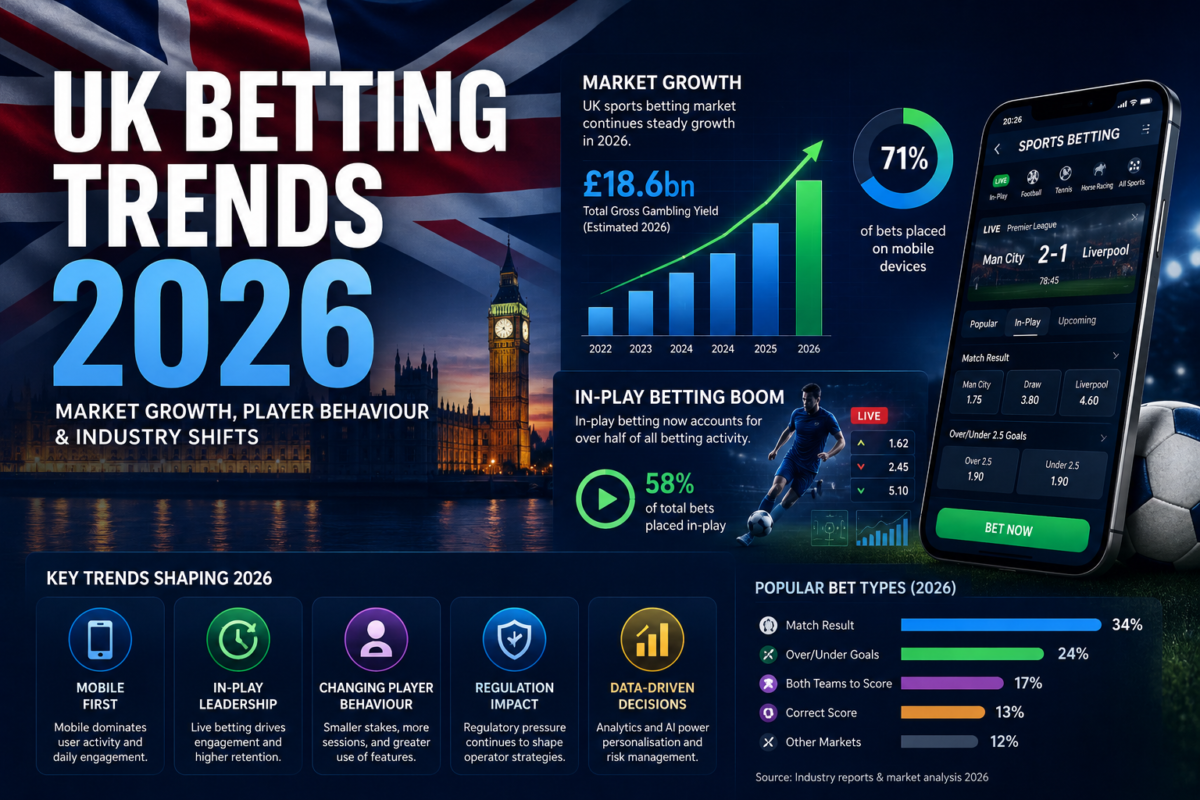
Mobile betting dominates activity in both the UK and Canada.
However, there are behavioural differences in how mobile engagement occurs.
UK mobile users often focus on:
- live football betting
- accumulator tracking
- odds comparison
- continuous sportsbook interaction
Canadian mobile behaviour is more associated with:
- rapid app adoption
- live sports engagement
- simplified betting flows
- onboarding convenience
Canada’s mobile-first market evolution occurred more rapidly because many users entered betting directly through digital platforms rather than retail sportsbooks.
In-Play Betting Is More Mature in the UK
Live betting remains highly popular in both markets, but the UK demonstrates significantly more mature in-play behaviour.
UK bettors are generally more accustomed to:
- complex live markets
- micro-betting options
- fast odds movement
- advanced cash-out usage
- continuous in-play interaction
Canadian users still concentrate more heavily on traditional match betting and mainstream live markets.
However, Canadian in-play participation continues growing rapidly each year.
Promotional Sensitivity Is Higher in Canada
Canadian bettors currently display stronger promotional responsiveness compared to UK users.
Common behaviours include:
- sportsbook switching for offers
- bonus-driven registration
- higher acquisition-related activity
- lower retention stability
The UK market, by comparison, has gradually shifted toward retention-focused engagement rather than purely acquisition-driven competition.
This reflects broader differences between mature and expansion-phase betting ecosystems.
Regulatory Structures Differ Significantly
The UK operates under a nationally recognised regulatory framework with long-established compliance systems.
Canada, meanwhile, functions through provincial regulation structures.
This creates:
- regional market fragmentation
- varying operator accessibility
- localised promotional intensity
- differing adoption rates between provinces
Ontario remains the most advanced and competitive Canadian betting environment.
Behavioural Risk Profiles Also Differ
Because of market maturity differences, behavioural risk patterns vary between the two regions.
UK bettors more commonly demonstrate:
- high-frequency betting routines
- advanced in-play engagement
- longer-term behavioural consistency
Canadian users more often display:
- exploratory platform behaviour
- promotional migration patterns
- early-stage engagement volatility
Both markets continue strengthening responsible gambling frameworks and behavioural monitoring systems.
Data Analytics Drive Strategy in Both Markets
Operators in both regions increasingly rely on behavioural analytics and predictive modelling.
Key focus areas include:
- retention optimisation
- engagement segmentation
- behavioural risk detection
- promotional efficiency analysis
- customer lifetime value forecasting
As competition intensifies, data infrastructure continues becoming one of the most important strategic advantages.
Future Outlook for UK and Canadian Betting Markets
The UK market is expected to remain highly stable and mature, with future evolution driven primarily by technology and regulation.
Canada, meanwhile, is likely to continue transitioning toward maturity through:
- behavioural stabilisation
- operator consolidation
- stronger retention strategies
- reduced promotional intensity
- more sophisticated user habits
Over time, Canadian betting behaviour may begin resembling mature European markets more closely.
Conclusion
The UK and Canadian betting markets currently represent two different stages of industry evolution.
The UK demonstrates highly mature, structured and sophisticated betting behaviour shaped by years of regulated market development. Canada, by contrast, remains in a dynamic expansion phase driven by rapid adoption and evolving user habits.
Despite these differences, both regions continue moving toward increasingly data-driven, mobile-first and behaviourally optimised betting ecosystems.